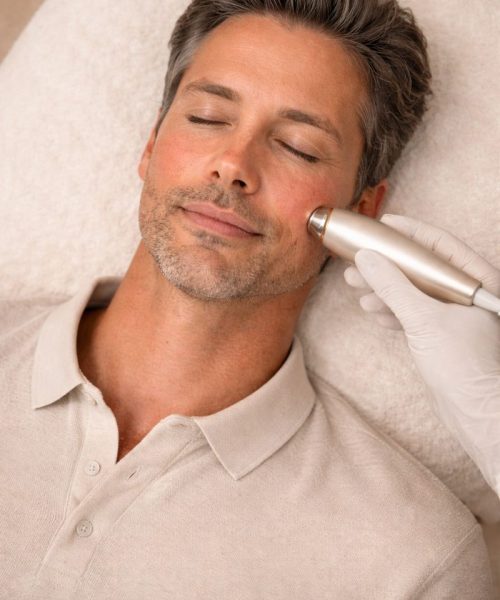
Couperose & rosacea treatment in Amsterdam
Persistent redness, visible vessels on cheeks or nose and skin that “flares up” easily. Couperose and rosacea affect appearance, comfort and self-confidence. A professional approach tackles redness in a targeted manner.
Couperose and rosacea are often confused. Couperose is mainly a vascular problem and rosacea is a chronic inflammatory skin condition in which redness, flushing, sensitivity and sometimes bumps/pustules play a role. A skin specialist will choose the right treatment based on your type of redness
Make an appointment with a rosacea and rosacea specialist in Amsterdam
Are you considering this treatment in Amsterdam?
Leave your details for more information.

The best couperose and rosacea clinics and salons in Amsterdam
Benefits of professional treatment for couperose & rosacea
The power of professional treatment is that it does not "camouflage" the skin image, but directly addresses the cause of redness and vessels. With the right technique and structure, skin is created that looks calmer and also behaves calmer.
| What the treatment does | How it works & what you notice |
|---|---|
| Reduces visible vessels (couperose) |
How it works: Vascular laser/IPL targets hemoglobin, causing dilated vessels to close in a controlled manner. What you notice: Fewer red lines and a calmer skin surface on cheeks/nose. |
| Tempers diffuse redness and flush sensitivity |
How it works: Selective energy settings reduce vascular activity and support a more even skin tone. What you notice: Less “flaring” and a more even tone throughout the day. |
| Improves skin comfort and irritability |
How it works: Barrier and calming protocols reduce irritation and support recovery. What you notice: Less burning, tightness and reactive sensations. |
| Makes skin texture more even |
How it works: Gentle skin improvement stimulates renewal without overstimulating the skin. What you notice: Skin looks smoother and makeup lies smoother. |
| Supports control of rosacea flares |
How it works: Combination of trigger strategy, sedation and where appropriate technology reduces flare intensity. What you notice: More predictability and fewer intense peaks in redness. |
| Less dependent on camouflage |
How it works: Less coverage is required due to a real reduction of vessels/redness. What you notice: A more natural look with fewer correction products. |
| Customization per skin image |
How it works: Settings and methods are tailored to vessels, diffuse redness and sensitivity. What you notice: More targeted results with a safer process. |
| More sustainable results with maintenance |
How it works: Treatment + maintenance limit new vascular activity and relapse due to triggers. What you notice: Redness remains more stable over months. |
| More confidence in daylight |
How it works: The skin appearance appears more even and calmer, especially on the cheeks and nose. What you notice: Less uncertainty about redness and “blush” spots. |
Suitable for:
Who is treatment suitable for?
Suitable for
- visible red vessels (telangiectasia) on cheeks, nose or chin
- diffuse redness that persists or returns
- flushes (suddenly red/warm) due to heat, stress, alcohol or spicy food
- rosacea with tenderness and irritation
- rosacea with bumps/pustules (in combination with skin management and indication)
Age and gender
Couperose and rosacea occur in women and men, often from young adulthood to 50+. With age, vessels can become more visible, partly due to skin thinning and reduced vascular regulation.
Skin and personal attunement
There is a suitable treatment route for almost every skin. However, effectiveness and safety depend on method choice, settings, timing and structure. Factors such as sensitivity, sun exposure, medication and previous treatments are decisive. That is why a professional approach starts with an intake and skin analysis.
Combinations that often make sense
- vascular laser/IPL + barrier repair (for rosacea with sensitivity)
- diffuse redness approach + maintenance protocol (for rosacea with flares)
- skin calming + selective technology (for reactive skin with trigger sensitivity)
Contraindications
Absolute: active skin infections, open wounds, fresh sunburn, untreated active herpes in the treatment area.
In consultation: pregnancy/lactation (depending on method), medication that increases photosensitivity, recent intensive peels/laser, very recent isotretinoin history (depending on indication).
How are rosacea and rosacea treated professionally?
Treatment works best when you split the problem into three layers: kegs, diffuse redness/flush and inflammatory sensitivity. In Amsterdam, energy-based technologies are mainly combined with soothing skin protocols. Below are the most important forms of treatment, each with its own mechanism and indication.
1) Vascular laser (vascular treatment / rosacea laser)
Vascular lasers focus energy on hemoglobin in the blood vessel. The vessel closes in a controlled manner and is then broken down by the body.
- Suitable for: clear, separate vessels on cheeks/nose (telangiectasia) and targeted vascular structures.
- Strengths: very targeted for visible vessels; often the most direct method for classic rosacea.
- Depth & result expectation: works selectively on kegs; diffuse redness can improve but sometimes requires additional action.
2) IPL (Intense Pulsed Light) for redness
Broad spectrum light targets hemoglobin and superficial redness. It works on larger “fields” of redness rather than one vessel.
- Suitable for: diffuse redness, superficial vessels and an uneven skin tone due to redness.
- Strengths: good for use in case of widespread redness; often cure-shaped with visible structure.
- Depth & result expectation: mainly superficial; A vascular laser is often more effective for deep or sturdy vessels.
3) Nd:YAG / longer wavelength vascular treatment
Penetrates deeper and can target firmer vascular structures, depending on device and settings.
- Suitable for: more persistent or deeper vessels, and specific vascular indications (indication-dependent).
- Strengths: can be used when a standard superficial approach is not sufficient.
- Depth & result expectation: deeper and more powerful, requires an experienced hand and correct skin analysis.
4) Calming Rosacea Protocols (Barrier, Inflammation, Stimulus Control)
Strengthens the skin barrier, reduces irritation and supports a calmer skin microclimate.
- Suitable for: Rosacea with tenderness, burning, “stinging”, and flares that cannot be explained by vessels alone.
- Strengths: essential for rosacea: without barrier management, the skin continues to respond faster, even after technology.
- Depth & result expectation: mainly works on comfort, stability and flare sensitivity; Combines strongly with vascular/redness technique.
5) Selective skin improvement (only where appropriate)
Mild skin improvement can support texture and skin quality, provided the rosacea condition allows this.
- Suitable for: skin that, in addition to redness, also has texture unevenness, and has sufficient stability for extra stimulation.
- Strengths: completes the end result: not only less red, but also calmer and more even.
- Depth & result expectation: always conservative with rosacea; aggressive stimuli increase flare risk.
Superficial versus deeper effect
IPL is often strong for diffuse redness and superficial vessels. Vascular laser is usually most targeted for clear vascular lines. Deeper or persistent vascular structures sometimes require a different wavelength (such as Nd:YAG) and more expertise. The best plan is rarely “one technique”, but a combination that suits your skin tone.
Why expertise is crucial
With rosacea and rosacea, the indication and settings determine the result. Too aggressive is counterproductive: more irritation, more flare sensitivity. Too mild produces little change. A specialist therefore chooses technique, intensity and timing based on vascular pattern, redness field and sensitivity.
What you can realistically expect
The result depends on the skin condition: loose vessels, diffuse redness, or rosacea with flares and sensitivity. What people usually experience as the biggest gain is one calmer overall picture: less noticeable redness and less “flaring up”.
Short term
- a smoother appearance of redness and less noticeable “hot spots”
- more skin comfort and less irritability with a good structure
- more confidence without constant camouflage
After a complete process
- clearer reduction of visible vessels (couperose)
- more stable diffuse redness and less intense flush reactions
- skin that looks calmer and behaves calmer
Durability and maintenance
Couperose and rosacea are often predisposition-driven. Technology reduces existing vessels/redness, but new vascular activity can return due to triggers,
sun exposure and natural skin aging. Maintenance and an appropriate skin care policy keep the result more stable.
During a consultation you will discuss which skin image is dominant for you, which treatment is appropriate, how quickly you will achieve results and what maintenance is realistic.
Have redness, veins or rosacea professionally assessed in Amsterdam
With rosacea and rosacea, a superficial approach is often insufficient: you temporarily see less redness, but the skin remains reactive. The real benefit comes when a specialist determines whether your skin needs primarily vascular-oriented treatment, or whether inflammation sensitivity and barrier repair are the key — and in what order.
An intake and skin analysis immediately make it clear which technology (such as IPL or vascular laser) is appropriate, which settings are safe and which skin policy is needed to limit flares. This prevents unnecessary treatments and accelerates the path to a calmer skin image. Beauty Unlimited Amsterdam helps you compare selected salons and clinics in Amsterdam, so that you make a conscious choice based on expertise, treatment vision and your skin goal.
Next step:
View affiliated salons and clinics in Amsterdam and discover which approach suits your type of redness.
Frequently asked questions about couperose and rosacea
+Couperose or rosacea: what is the difference?
+How do I know if I have rosacea?
+How do I recognize rosacea?
+Does a vascular laser work better than IPL for rosacea?
+How many treatments do I usually need?
+Does couperose/rosacea treatment hurt?
+Do I have downtime after IPL or vascular laser?
+Can rosacea be cured?
+What triggers make rosacea or rosacea worse?
+Is makeup or skincare bad for rosacea?
+Is treatment safe for all skin types?
+How much does a rosacea or rosacea treatment cost in Amsterdam?
+Can I combine IPL and vascular laser?
+Why does redness sometimes return?
+Where can I find a good specialist in Amsterdam?
Redness, vessels or rosacea in Amsterdam? Choose an approach that really tackles it
With rosacea and rosacea, “just camouflaging” is inadequate. Visible vessels remain visible, redness continues to return and the skin can flare up overnight. You make the difference with a professional analysis: it is mainly your skin image vascular-driven, flush-driven or plays inflammatory sensitivity the leading role?
Only then does it become clear which route makes the most sense: vascular laser for targeted vessels, IPL for diffuse redness,and a rosacea-targeted skin protocol to stabilize the barrier and limit flares. This is exactly why an intake is not a formality, but the step that determines whether you build up a calm skin image — or keep circling.
Do you want to know which approach suits your redness? Compare specialized salons and clinics in Amsterdam and schedule a consultation.