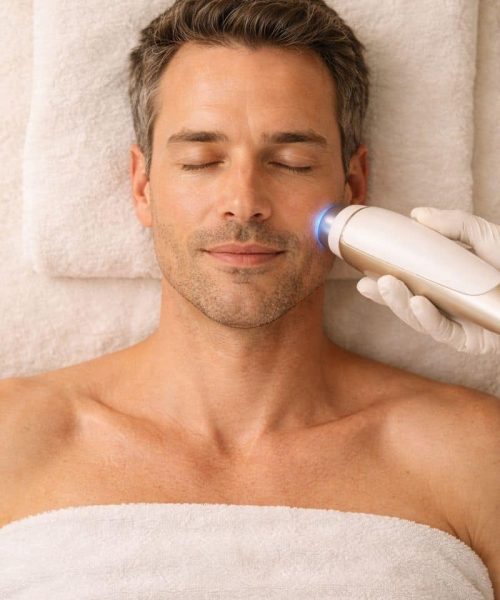
Sensitive skin treatment in Amsterdam
Sensitive skin is a skin condition that causes irritation, redness, burning or a pulling sensation. This is because the skin cannot sufficiently perform its protective and regulating functions.
Many people try to suppress these complaints with milder products or by avoiding treatments. In practice, this often worsens the problem, because the underlying cause — a disrupted skin barrier and overactive stimulus processing — is not addressed.
A professional sensitive skin treatment is therefore not a quick cosmetic procedure, but a targeted strategy to make the skin predictable, stable and comfortable again.
Make an appointment with a sensitive skin specialist in Amsterdam
Are you considering this treatment in Amsterdam?
Leave your details for more information.

The best clinics and salons in Amsterdam that specialize in sensitive skin
What a professional sensitive skin treatment delivers
The benefits of sensitive skin treatment come from restoring regulation, not from suppressing symptoms.
| What the treatment does | How it works & what you notice |
|---|---|
| Visibly reduces redness |
How it works: The treatment helps soothe the skin and better balances blood flow. What you notice: The skin looks calmer and more even. |
| Reduces a burning or stinging sensation |
How it works: The skin reacts less intensely to external stimuli. What you notice: More comfort and fewer unexpected reactions. |
| Restores natural skin protection |
How it works: The skin's protective layer is supported and replenished. What you notice: The skin is less likely to become out of balance. |
| Makes the skin less sensitive |
How it works: The skin learns to process stimuli normally again. What you notice: Less reaction to temperature changes and products. |
| Improves fluid balance |
How it works: The skin can retain moisture better. What you notice: Smoother and more comfortable skin. |
| Strengthens skin resistance |
How it works: The skin is structurally better protected. What you notice: Less quickly recurring complaints. |
| Brings more peace to the skin |
How it works: Long-term skin stress decreases. What you notice: A more stable and predictable skin condition. |
| Supports healthy skin aging process |
How it works: Less constant irritation reduces the burden on the skin. What you notice: The skin remains resilient and in good condition for longer. |
| Gives more confidence in the skin |
How it works: The skin reacts more evenly and calmly. What you notice: Less uncertainty with treatments and product use. |
For whom is a sensitive skin treatment suitable?
Suitable for
- Women and men
- All ages
- Sensitive, fast-reactive skin
- Skin with redness or flushes
- People with stress-related skin complaints
Can be combined well with
- Restorative treatments
- Anti-aging (if mild and phased)
- Hydration treatments
Contraindications
Absolute: active infections, open skin lesions.
In consultation: rosacea, eczema, pregnancy.
What sensitive skin really is
Sensitive skin is characterized by a reduced tolerance to external and internal stimuli. This manifests itself in redness, tingling, burning, itching or a restless skin feeling — often without clearly visible abnormalities.
Scientifically speaking, sensitive skin is the result of three interacting factors: a disrupted skin barrier, increased nerve sensitivity and a dysregulated inflammatory response.
Aesthetic and structural problems
- Redness and flushes
- Rapid irritation with temperature changes
- Burning or prickling sensation
- Dryness and flaking
- Accelerated skin aging due to chronic stress
Biological and anatomical mechanisms
- Decreased ceramide and lipid layer
- Increased transepidermal water loss (TEWL)
- Overactive nerve endings (neurogenic inflammation)
- Increased release of inflammatory mediators
- Reduced microcirculation and recovery capacity
Why expertise is crucial
Sensitive skin cannot be “forced” to produce results. Too intensive techniques, incorrect peelings or incorrect energy settings worsen the complaints. Professional expertise is essential to soothe the skin and at the same time structurally strengthen it.
How a sensitive skin treatment works
Sensitive skin is not an unambiguous diagnosis, but a collective name for various underlying disorders. In some cases a disturbed skin barrier is central, in others an overactive nerve response or chronic low-grade inflammation. That is why a professional approach almost always consists of multiple, carefully chosen forms of treatment.
Soothing and barrier repair treatments
These treatments focus primarily on restoring the protective skin layer. By replenishing and stimulating lipids such as ceramides and fatty acids, transepidermal water loss decreases and the skin becomes less reactive.
- Suitable for: skin with redness, tightness, irritation or impaired tolerance to products.
- Depth and result: mainly superficial to medium deep, with a focus on stabilization and comfort.
Cold laser / low-level laser therapy (LLLT)
Cold laser therapy uses low-energy laser light that does not generate heat. The light penetrates the skin and influences cellular processes without tissue damage or irritation.
- Mechanism of action: the laser light stimulates mitochondrial activity in skin cells, leading to improved cell energy, accelerated recovery processes and reduction of inflammatory responses.
- Suitable for: very sensitive skin, skin with redness, post-inflammatory reactions and people who respond poorly to mechanical or thermal treatments.
- Depth and result: medium-deep biological action with a pronounced calming and regulating effect.
Oxygen and microcirculation therapy
This oxygen treatments improve oxygen supply and blood circulation to the skin without mechanical stress. Better microcirculation supports the skin's natural recovery capacity.
- Mechanism of action: increased oxygen availability supports cell metabolism and accelerates recovery of stressed skin.
- Suitable for: tired, gray and easily irritated skin.
- Depth and result: superficial to medium deep, especially visible in complexion and skin comfort.
Low-intensity radio frequency (RF)
For sensitive skin, only use low levels Radio Frequency intensities and custom settings. The goal is not to tighten, but to strengthen the skin structure.
- Mechanism of action: controlled heating stimulates collagen fibers and improves skin density, which makes the skin less vulnerable to external stimuli.
- Suitable for: sensitive skin with signs of weakening or early skin aging.
- Depth and result: deeper than superficial treatments, with a focus on structural skin quality.
Combination treatments
For chronic or long-term sensitivity, a combination of treatment options is often the most effective. Combining barrier repair, biological stimulation and structural strengthening creates a more stable and lasting result.
Why this works: multiple disrupted processes are tackled simultaneously, making the skin less likely to relapse into hypersensitivity.
What can you expect per type of treatment?
The results of sensitive skin treatment depend on the technique chosen, the severity of the sensitivity and the underlying cause. Below is an explanation for each form of treatment what people usually experience, both in the short and longer term.
Soothing and barrier repair treatments
Short term: the skin immediately feels more comfortable. Tightness, itching and a burning sensation decrease.
What you see: a calmer skin image with less diffuse redness.
After a treatment: the skin responds less quickly to products, temperature changes and external stimuli.
Sustainability: With consistent maintenance, the result remains stable, especially with daily barrier-supporting care.
Cold laser / low-level laser therapy (LLLT)
Short term: Many people experience a calm, relaxed skin feeling after treatment without any after-stimulation.
What you see: redness and flushes gradually decrease, often subtle but consistent.
After a treatment: the skin recovers faster from stress and responds less intensely to stimuli.
Sustainability: results build over multiple sessions and last longer with structural sensitivity.
Oxygen and microcirculation therapy
Short term: the skin looks fresher and feels more vital, without extra sensitivity.
What you see: a brighter complexion and less gray color.
After a treatment: improved blood circulation supports the skin's natural recovery capacity.
Sustainability: especially effective as a supportive treatment within a broader treatment plan.
Low-intensity radio frequency (RF)
Short term: the skin feels slightly firmer and more resilient, without heat irritation.
What you see: a smoother skin structure and subtle improvement in skin quality.
After a treatment: the skin is structurally stronger and less vulnerable to external influences.
Sustainability: results are longer lasting than purely sedative treatments, if done correctly.
Combination treatments
Short term: Noticeable skin comfort more quickly and less irritation.
What you see: a more stable skin image with fewer fluctuations in redness and sensitivity.
After a treatment: the skin becomes more predictable, recovers faster and remains balanced for longer.
Sustainability: this is the most effective approach for chronic or long-term skin sensitivity.
Realistic expectations
Sensitive skin can demonstrably improve and stabilize, but the predisposition often remains. Periodic maintenance and carefully coordinated home care are therefore part of a sustainable strategy.
Frequently asked questions for sensitive skin
+What exactly is sensitive skin?
+Is sensitive skin the same as rosacea?
+Does treatment hurt?
+Can sensitive skin improve?
+Are results permanent?
+Can I combine this with anti-aging?
+Is my skin too sensitive for treatments?
+How many treatments are needed?
+Can stress worsen skin sensitivity?
+Are men also suitable?
+What does a treatment cost on average?
+Is this suitable for eczema?
+When will I see results?
+Why not aggressive peels?
+Where can I find specialized salons?
Sensitive skin requires precision
When your skin reacts quickly, trial and error falls short. Targeted treatment starts with expertise, the right technology and an approach that respects the skin instead of challenging it.
Compare specialized salons in Amsterdam and discover which treatment suits your sensitive skin and recovery needs.