
Best Supplements for Women Over 50
Do you hear that too? That little voice in your head that says: “Do I really need to take supplements?” You may notice that your energy is less. Or your bones feel more fragile. Maybe your skin is no longer as tight as it used to be.
Let's keep it simple. Women over 50 have different nutritional needs than younger women. Your body changes. And supplements can help. But not every jar on the shelf is a game changer.
Being here the most important supplements that women aged 50+ really need.
1. Vitamin D and Calcium – Keep your bones strong
After the age of 50, your bone density begins to noticeably decrease. This is because your body absorbs calcium less efficiently and your bones gradually lose minerals. This process increases the risk of osteoporosis and bone fractures, making it extra important to maintain your calcium and vitamin D intake.
Calcium and vitamin D are your best friends for preventing osteoporosis.
Vitamin D helps your body absorb calcium better. Without enough vitamin D? Your bones suffer.
Calcium is the building block of your bones. If you don't get enough of it, your body borrows it from your bones. And you don't want that.
Best sources? Food such as salmon, cheese, almonds. But let's be real, most women over 50 don't get enough. So a supplement is smart.
How much do you need? 1000-1200 mg calcium + 800-1000 IU vitamin D per day.
2. Omega-3 – Keep your heart and brain sharp
Your heart is busy and usually doesn't get stronger as the years go by. Omega-3 fatty acids support your heart, brain and joints. They reduce inflammation and keep your blood vessels flexible.
EPA and DHA are the most effective forms of omega-3. You can find them in oily fish such as salmon and mackerel.
Why is this important? After the age of 50, the risks of cardiovascular disease increase. Omega-3 helps balance your cholesterol and reduces inflammation.
Best source? Fish oil supplements or algae oil for a vegan option.
How much do you need? 1000 mg per day, minimum.
3. Collagen & Hyaluronic Acid – Skin, joints, hair
From the age of 30, your collagen production decreases by approximately 1% per year After the age of 50 or during menopause, this loss increases to 2% per year! That means wrinkles, thinner hair and stiffer joints.
Collagen helps for skin elasticity, strong nails and healthy joints.
Hyaluronic acid retains moisture in your skin and joints. The result is less dry skin and less cartilage loss later in life
Best sources? Bone broth, fish skin, collagen peptides, or supplements containing type I and III collagen, hyaluronic acid supplements.
How much do you need? 5-10 grams of collagen and approximately 500mg of hyaluronic acid per day
4. B Vitamins & Magnesium – Energy and stress management
As you get older, your metabolism decreases and your body produces less energy. This can lead to fatigue and a slower recovery. The quality of your sleep also often decreases, which affects your overall energy level and mood.
B12 supports your nervous system and prevents fatigue. Many women over 50 have a deficiency, especially if you eat less meat.
B6 helps with hormone balance and immune system.
Best sources? Whole grain products, nuts, leafy vegetables. But many women don't get enough of it.
How much do you need? B12: 2.4 mcg per day or take. Magnesium: 320 mg per day.
5. Probiotics – Keep your gut and immune system healthy
Your intestinal flora changes with age. Fewer good bacteria, poorer digestion and a weaker immune system can contribute to this.
Probiotics help with digestion, reduce bloating and support your immune system.
Which strains work best? Lactobacillus and Bifidobacterium are the top choices.
Best sources? Fermented foods like kefir and yogurt, or a good probiotic supplement.
How much do you need? At least 10 billion CFUs per day.
Frequently Asked Questions (FAQ)
1. What are the most important supplements for women over 50?
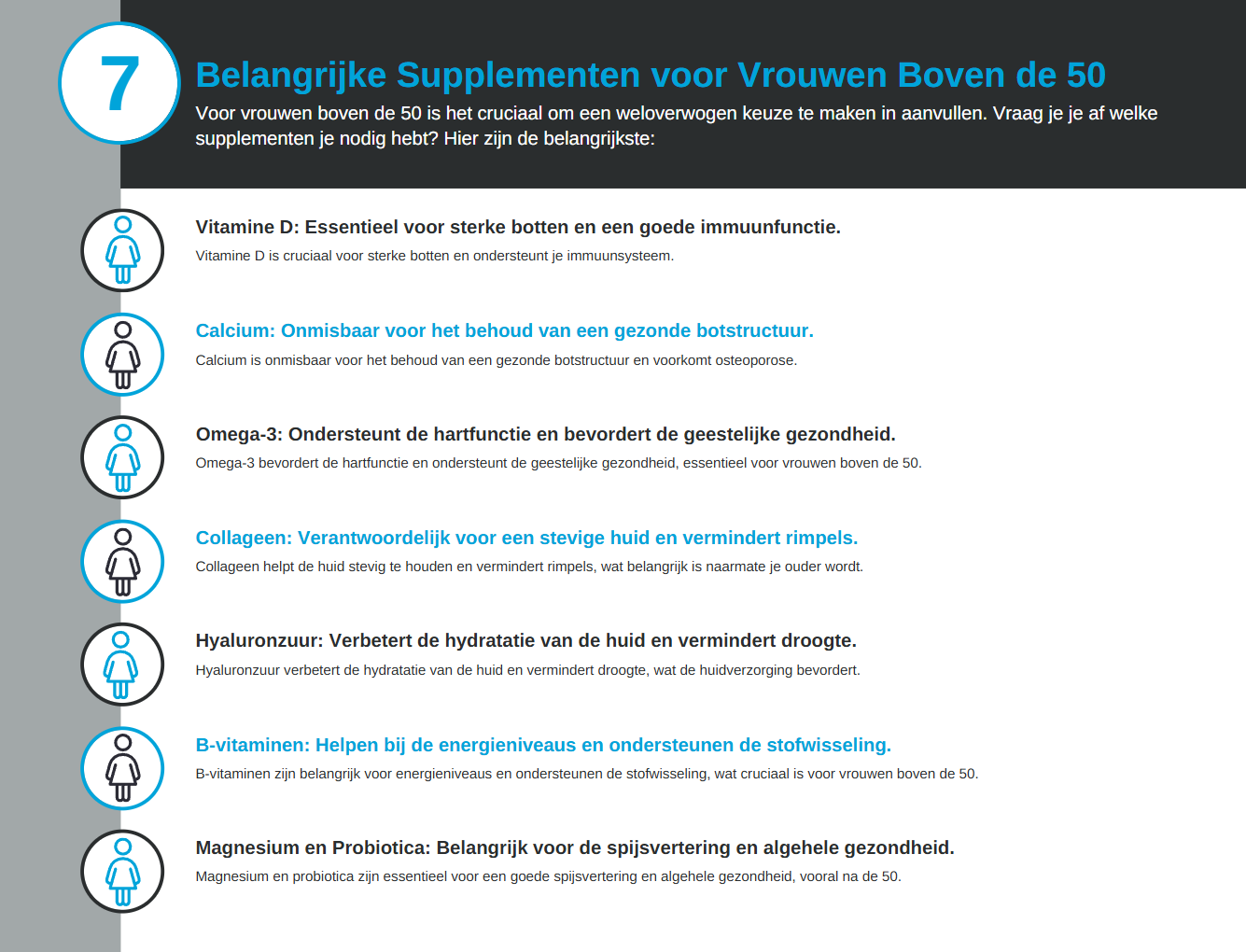
Vitamin D, calcium, omega-3, collagen, hyaluronic acid, B vitamins, magnesium and probiotics are essential for bone health, heart function, skin care and energy.
2. Do I really need supplements, or can I get everything from food?
In theory you can get all the nutrients from food, but many women over 50 do not get enough calcium, vitamin D and omega-3. A supplement can help to supplement deficiencies.
3. How do I know if I am deficient in certain nutrients?
Possible deficiencies can manifest themselves in fatigue, weak nails, hair loss, joint pain and an increased risk of osteoporosis. A blood test via your GP can provide clarity.
4. Are there any supplements I should avoid?
Too much calcium without enough vitamin D can cause kidney stones. Too high doses of vitamin A can be harmful. If in doubt, consult a doctor.
5. When is the best time to take supplements?
It is best to take vitamin D and omega-3 with a meal that contains fat. You can take magnesium and calcium in the evening for better absorption and relaxation
Overview of supplements for 50+ women
| Supplement | Why it's important for women over 50 | How much per day? | Best sources |
|---|---|---|---|
| Vitamin D & Calcium | Keeps bones strong and prevents osteoporosis | 1000-1200 mg calcium + 800-1000 IU vitamin D | Salmon, cheese, almonds, supplements |
| Omega-3 | Supports the heart, brain and joints | 1000mg EPA/DHA | Fatty fish (salmon, mackerel), fish oil, algae oil |
| Collagen & Hyaluronic Acid | Improves skin, joints and hair | 5-10g collagen | Bone broth, collagen supplements |
| B vitamins & Magnesium | Provides energy, stress management and sleep quality | B12: 2.4 mcg, Magnesium: 320 mg | Whole grain products, nuts, leafy vegetables |
| Probiotics | Supports digestion and immune system | At least 10 billion CFUs | Yogurt, kefir, probiotic supplements |
Best Supplements for Women Over 50? The one your body really needs. Address your deficiencies, focus on the essentials, and stay sharp, strong and energetic.