

Visceral fat is an important, yet often overlooked aspect of our health. It is a type of fat located around our internal organs. Although this fat is not visible, an accumulation of visceral fat can lead to various health problems. When we think about fat, we often think of the visible fat we see around our belly, hips, thighs, and other parts of our body. Visible fat can nowadays be easily removed with cryolipolysis, However, visceral fat lies deeper, making it untreatable by cryolipolysis. Visceral fat is therefore often less visible, yet it is far more important for our health. In this article, based on numerous scientific studies, we delve deeper into visceral fat and the role it plays in our overall health.
What is visceral fat?
Organ fat, also known as visceral fat, is the fatty tissue that accumulates around our internal organs, such as the liver, pancreas, and intestines. Unlike subcutaneous fat, which sits just under the skin, organ fat cannot be seen or touched. It can only be accurately measured using medical equipment, such as a CT scan or an MRI scan. There are also scales on the market that claim to be able to measure organ fat, but this is merely an indication. There are, however, other ways to determine if you are at risk of organ fat, which we explain at the bottom of this article.
Why is visceral fat dangerous?
Visceral fat is associated with various health problems, including type 2 diabetes, cardiovascular disease, and fatty liver.
Type 2 diabetes: Research has shown that an accumulation of visceral fat in the abdominal region can lead to insulin resistance, a condition in which the cells in our body do not respond properly to insulin. Insulin is a hormone needed to get glucose from the blood into the cells of our body for energy. If the cells do not respond properly to insulin, too much glucose remains in the blood, which can lead to type 2 diabetes.
Cardiovascular diseases: Visceral fat can also lead to cardiovascular diseases, such as a heart attack or stroke. Specifically, an accumulation of visceral fat can lead to high blood pressure, high cholesterol levels, and inflammation in the body, all factors that can contribute to cardiovascular disease.
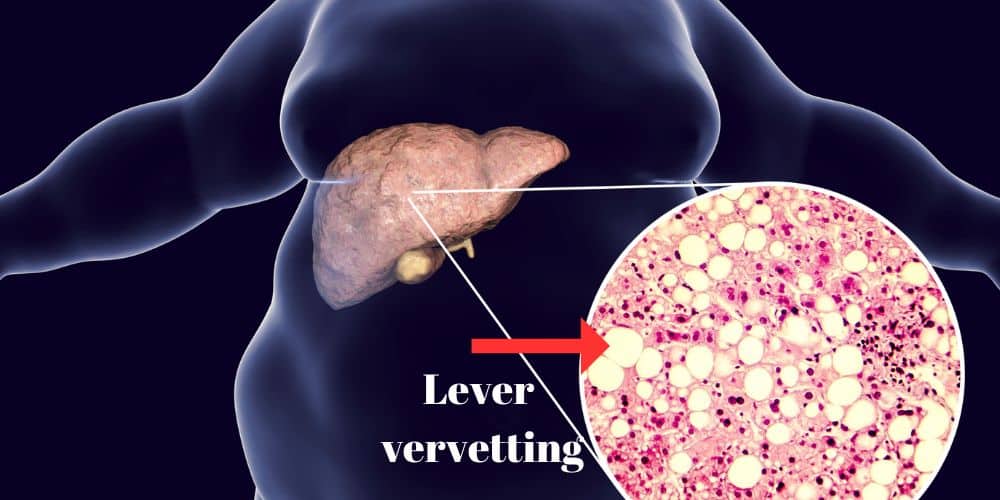
Fatty liver: Visceral fat can also lead to fatty liver disease, a condition in which too much fat is stored in the liver. This can lead to inflammation and scarring in the liver, which can ultimately result in liver failure. In addition to a healthy lifestyle, there are also supplements to support a healthy liver.
How does visceral fat form?
The accumulation of visceral fat is often associated with being overweight and obesity. People who are overweight often have more visceral fat than people with a healthy weight. This is because adipose tissue tends to accumulate around the internal organs when there is too much fat in the body.
However, there are also other factors that contribute to the accumulation of visceral fat, such as a sedentary lifestyle, a poor diet, and genetic predisposition. People who are sedentary and have a diet rich in processed foods and added sugars have a greater risk of accumulating visceral fat.
Causes of visceral fat
- Bad habits such as smoking and eating processed food
- Insufficient physical activity
- Irregular or insufficient sleep
- Older age
- Excessive alcohol consumption
- Wrong and unhealthy food
10 tips for less visceral fat!
Fortunately, it is possible to reduce visceral fat. Here are some ways this can be done:
1. Losing weight can reduce visceral fat
When someone is overweight, fat can accumulate in and around the organs, which can lead to health problems such as diabetes, cardiovascular disease, and liver disorders. Losing weight can reduce body fat, including the fat around the organs, thereby lowering the risk of these conditions. However, it is important to lose weight in a healthy way through a balanced diet and sufficient physical activity. Intermittent fasting This can help, where you, for example, eat within an 8-hour timeframe and do not eat for 16 hours.
2. Eat fewer carbohydrates
The number of carbohydrates one needs to reduce to lose weight varies from person to person, depending on how quickly one wants to lose weight and what one can sustain. A 2003 study showed that obese women who followed a low-carbohydrate diet lost more than twice as much weight compared to women who followed a low-fat diet. After six months, the low-carbohydrate group lost an average of 8.5 kilograms, while the low-fat group lost an average of 3.9 kilograms. In addition, improvements were seen in good HDL cholesterol and triglyceride levels.
A diet rich in unprocessed foods and little added sugar. This can help reduce visceral fat. Reducing the intake of processed carbohydrates is one of the fastest ways to lose visceral fat, also known as a low-carbohydrate diet. A low-carbohydrate diet involves reducing carbohydrate intake and replacing it with healthy fats and proteins. This entails primarily must avoid refined carbohydrates such as simple sugars, as well as bread, pasta, potatoes, and rice. Good sources of carbohydrates such as vegetables, fruit, nuts, brown rice, oatmeal, and buckwheat may be eaten in moderation.
3. Omega-3 oil to reduce visceral fat
It is important to to get enough omega-3 fatty acids. You can do this by eating more healthy fats, such as fatty fish, fish oil, or algae oil. Omega-3 fatty acids reduce insulin resistance and increase insulin sensitivity, which is important for regulating blood sugar levels. International health organizations recommend taking between 250 and 500 mg of EPA and DHA per day. Studies show that fish oil supplements can help reduce visceral fat. To get enough omega-3 fatty acids, you can choose to eat fatty fish twice a week or use a supplement such as fish oil or algae oil.
4. Burn visceral fat with physical exercise
Regular Physical exercise can burn visceral fat. It is recommended to do at least 150 minutes of moderate-intensity physical activity per week, such as walking or cycling. Move more, especially if you have a lot of sedentary work. Take regular breaks to walk a short distance. Get a dog, which forces you to go for a walk every day.
There are studies suggesting that dog owners generally have better health than people without dogs. A large number of studies have shown that dog owners get more physical exercise than people without dogs, because they have to walk their dogs and play with them. This can contribute to better physical health, including a healthier heart and better blood pressure. Furthermore, studies have also shown that dog owners often suffer less from depression and stress than people without dogs.
5. Strength training for visceral fat
If you are looking for an effective sport to lose visceral fat, strength training is a good choice. Research has shown that strength training can play an important role in burning visceral fat, and that is good news for people who are worried about their health. You don't have to You don't necessarily have to go to the gym to do strength training. You can start by lifting weights at home or in the park, for example. The most important thing is that you do something with weights, because this can help build muscle mass and burn fat.However, if you feel that strength training is not for you at all, then doing group training can be a good option. With group training, you are still doing a form of strength training, but the team spirit and the social aspects of training together can make it much more enjoyable to stick with. Moreover, you can also add other forms of physical activity, such as cardio exercises or stretching, to improve your overall fitness.
6. Reduce stress
Long-term Stress can contribute to the accumulation of visceral fat. Therefore, try to reduce stress through, for example, meditation, yoga, or breathing exercises. Stress has a negative impact on virtually all aspects of your life and is therefore a silent killer of your health. When you constantly have an excessively high level of the stress hormone cortisol in your body, this has adverse effects on, among other things, your testosterone levels, sleep, mental well-being, body fat percentage, and appetite.Too much stress in your life can increase appetite and the storage of visceral fat, causing your waist circumference to increase.Fortunately, there are several ways to lower your cortisol levels, such as exercising and getting enough sleep. But addressing the root cause of your stress is, of course, the best option. This can be different for everyone, so it is important to discover what works for you. Meditation techniques and yoga, for example, can help you cope better with stress and increase your mental resilience. In this way, you learn various mental techniques to keep stress under control and stay in charge.
Continuously having too much of the stress hormone cortisol in your body is detrimental to:
- Testosterone level
- Sleep
- Mental well-being
- Body fat percentage
- Appetite
- Organ

7. Eat more healthy fiber to combat visceral fat:
A healthy diet contains various nutrients, including fiber, that are often overlooked. Fiber is a type of carbohydrate that is not digested by the body. Soluble fiber has the property of suppressing appetite and can aid in weight loss. An observational study involving 1,100 participants found that increased fiber intake can contribute to a decrease in visceral fat. Participants who consumed an extra 10 grams of soluble fiber daily showed a 3.7% decrease in their abdominal fat percentage over a 5-year study period. This highlights the importance of consuming sufficient fiber as part of a healthy diet and to reduce the risk of health problems.
8. Avoid trans fats
Not all fats in our diet are equally healthy. Some fats, such as polyunsaturated fatty acids (like omega-3 fatty acids), have positive effects on our health, while other fats, such as trans fats, can actually be harmful to our bodies. Trans fats are the unhealthiest fats we can eat and are artificially produced by manufacturers to make food cheaper and easier to produce. Research has shown that The more trans fats we consume, the greater the risk of accumulating visceral fat.It is therefore wise to avoid trans fats in our diet as much as possible. We can do this by avoiding fried foods and limiting processed foods such as snacks, cookies, and pastries. Avoiding trans fats can help make our bodies healthier and reduce our risk of disease.
9. Get enough sleep
Insufficient sleep can lead to the accumulation of visceral fat. Therefore, ensure you get enough good quality sleep. A good night's sleep is not only important for good health, but it can also help burn unhealthy visceral belly fat. Research has shown that improving sleep quality can lead to overall weight loss, especially in the abdominal region (source). Insufficient sleep, on the other hand, can lead to an increase in unhealthy visceral fat. It is recommended to get 7-9 hours of sleep per night to function optimally.
10. Drink less alcohol
Our body has no efficient way to store alcohol. Therefore, the liver takes priority in breaking down alcohol over burning body fat. This means that when you drink alcohol, your body is unable to burn fat until all the alcohol is out of your system. Furthermore, alcohol is a source of empty calories, meaning it contains many calories but provides few nutrients. For example, a glass of rosé contains about 110 calories and a bottle of beer contains about 135 calories. If you drink alcohol regularly, this can therefore contribute to an increased calorie intake, which can lead to weight gain, including abdominal fat accumulation and visceral fat.If you enjoy an occasional alcoholic drink, try to limit your alcohol consumption to a maximum of 2 glasses per week. By drinking less alcohol, you can contribute to reducing calorie intake and burning body fat, especially in the abdominal area. Reducing your alcohol consumption can therefore be an important step towards achieving your goals for a healthier body.
Visceral fat storage differs between men and women.
The storage of visceral fat works differently between men and women. Men tend to store fat around their abdomen, while women store it on the hips, buttocks, and legs. As women age, muscle mass decreases and body fat increases, which can lead to more visceral fat, even if there is no weight gain. In men, age, inactivity, and an unhealthy lifestyle can also lead to the development of visceral fat. Excessive alcohol consumption can lead to increased fat storage around the abdominal area in men.
There are even more differences to be noted between men and women when it comes to the storage of visceral fat:
- Men generally have more muscle mass than women, which means they generally burn more calories, even at rest, making the risk of developing visceral fat lower than in women.
- In men, testosterone levels can influence the amount of visceral fat stored. Lower testosterone levels can lead to increased fat storage.
- In women, pregnancy can lead to an increase in visceral fat, especially if too much weight is gained during pregnancy.
- In men, there is a higher risk of developing cardiovascular disease due to the storage of visceral fat, while in women, the storage of subcutaneous fat carries a higher risk of these diseases.
How can you measure visceral fat?
There are several ways to measure whether you have visceral fat. A An accurate method is by means of a CT scan or MRI scan., but these methods are usually only used for research or medical purposes. However, there are also faster ways to get an estimate of your visceral fat percentage:
-
Measuring organ fat with Bioelectrical Impedance Analysis (BIA): This is a method in which a device sends a low electrical current through your body to measure resistance. Based on this resistance, the device can estimate your visceral fat percentage. Smart scales often measure total body fat percentage in this way, including visceral fat. Visceral fat is the fat surrounding the organs in the abdominal cavity and is associated with health risks.
Although smart scales can provide a good estimate of total body fat percentage, they are not always accurate in measuring specific visceral fat. A study published in the Journal of Diabetes Science and Technology concluded that various types of smart scales that measure visceral fat yielded inconsistent and inaccurate results compared to the most reliable method, MRI scans.
-
Skinfold measurement: This is a method in which a professional measures your skinfolds using special calipers. Based on these measurements, an estimate can be made of your total body fat percentage and therefore whether you are at risk of visceral fat.
-
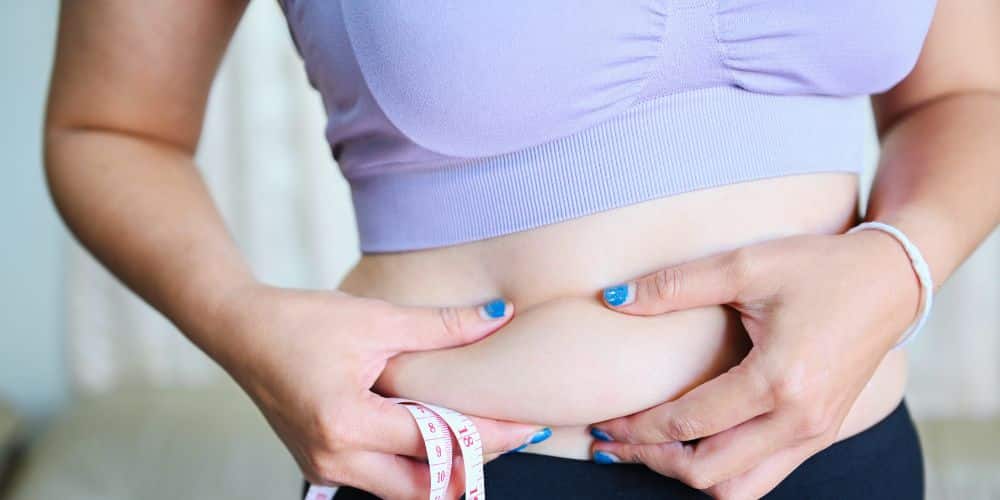
Waist circumference: Measuring your waist circumference can indicate whether you have an increased risk of visceral fat. A waist circumference of more than 88 cm in women and more than 102 cm in men is considered an increased risk.
Conclusion visceral fat
Visceral fat is an important but often overlooked aspect of our health. An accumulation of visceral fat can lead to various health problems, including type 2 diabetes, cardiovascular disease, and fatty liver disease. Fortunately, it is possible to reduce visceral fat through weight loss, a healthy diet, exercise, stress reduction, drinking less alcohol, and getting enough sleep. By taking these steps, we can make our bodies healthier and reduce the risk of health problems caused by excess visceral fat.