
LPG during pregnancy or breastfeeding
Is LPG allowed during pregnancy or breastfeeding? That is a question we receive regularly.
Many pregnant women are looking for: relief from heavy legs, fluid retention and tense, “full” skin. And after giving birth, the desire shifts to regain control over skin quality, contour and tissue repair, without aggressive techniques.
Here you can read which LPG applications are logical during this period, which zones to avoid, how it works on microcirculation and lymph, and why professional implementation makes the difference between 'just a massage' and a protocol that really suits your phase.
Make an appointment today
Are you considering this treatment in Amsterdam?
Leave your details for more information.
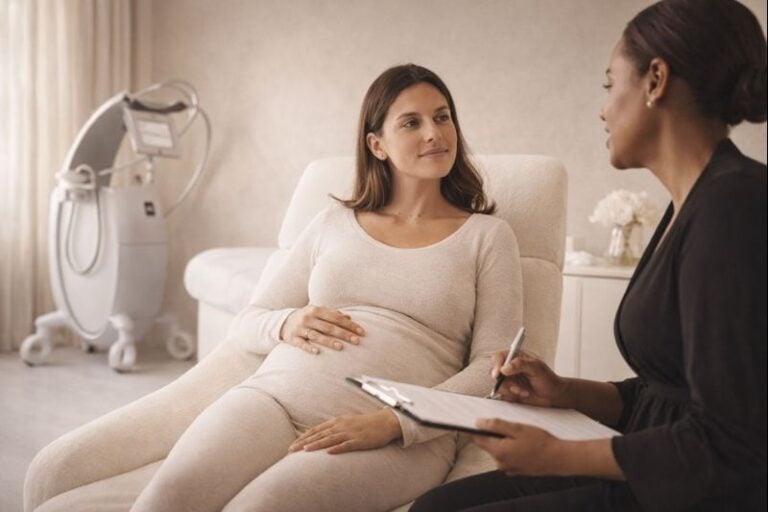
Only specialized LPG clinics and salons in Amsterdam during pregnancy or breastfeeding
Benefits of LPG during pregnancy or breastfeeding
In this phase of life, LPG treatment is not about “hard intervention”, but about comfort, circulation and fabric quality. When applied professionally, LPG mainly helps with complaints caused by moisture, pressure on blood circulation and changed connective tissue tension.
| What the treatment does | How it works & what you notice |
|---|---|
| Helps with heavy legs and a “full” feeling | How it works: stimulates venous and lymphatic flow via rhythmic mechanical stimuli. What you notice: legs often immediately feel lighter; less pressure around ankles and lower legs. |
| Contributes to less fluid retention (edema feeling) | How it works: supports drainage of moisture through drainage-oriented treatment sequence and pressure dosage. What you notice: less “tight skin”, shoes/rings feel less pinching (where relevant). |
| Improves skin circulation and skin tone | How it works: activates microcirculation in the dermis and superficial subcutaneous tissue. What you notice: skin looks smoother, warmer and more vital; less gray/stunted appearance. |
| Makes connective tissue more flexible | How it works: mobilizes adhesions and tension in connective tissue septa and fascial layers. What you notice: skin feels “looser”, less stiff; more comfortable feeling with movement or pressure. |
| Helps optically soften cellulite (especially postpartum) | How it works: combination of drainage + tissue mobilization makes pitting less pronounced. What you notice: skin structure looks smoother, especially after a treatment and with maintenance. |
| Supports skin recovery and firmness (gradually) | How it works: mechanical stimulation activates connective tissue processes that are consistent with collagen/elastin remodeling. What you notice: skin feels firmer and more resilient over weeks, not “overnight”. |
| Makes contours more refined due to less engorgement | How it works: Due to a decrease in moisture and better circulation, legs/hip zones appear tighter. What you notice: clothes fit better; less “bloated” silhouette (especially legs). |
| Comfort and relaxation without invasive stimuli | How it works: gentle, rhythmic stimulation without needles, heat or aggressive energy. What you notice: relaxed feeling; treatment often feels like 'effective massage' with protocol. |
| Smart step towards postpartum trajectory | How it works: helps get the tissue moving, after which more intensive body protocols will work better later. What you notice: faster feeling of progression once you continue to build up postpartum. |
Suitable for:
Who is LPG suitable for during pregnancy or breastfeeding?
LPG during this period requires phase- and zone-oriented treatment. So it is less “one treatment for all” and much more: which complaint, which zone, which intensity.
During Pregnancy
- Heavy legs, fluid retention, ankles that 'fill up': with a drainage protocol on lower legs/ankles.
- Venous complaints (feeling of pressure/reduced return flow): only if there are no red flags and the setting has experience with pregnancy protocols.
- Comfort and mobility complaints due to engorgement: when massage is pleasant, but you want a more consistent protocol.
During Breastfeeding & Postpartum
- Skin texture restoration: as cellulite treatment for legs/buttocks/hips.
- Skin sagging: as part of a treatment aimed at tissue quality and strength.
- Contour and “residual zones”: where moisture and tissue tension play a role (no crash diet effect, but refinement).
Phase, skin and body-oriented indication
- Age: all ages; skin reaction and recovery rate differ mainly due to connective tissue quality and lifestyle.
- Skin types: suitable for most skin types; intensity is adjusted based on sensitivity and vascular reactivity.
- Body Types: especially effective for 'congestion/moisture + troubled skin structure'; with pure fat volume, combination with lifestyle/postpartum trajectory makes more sense.
- Goals: comfort (pregnancy) versus texture/firmness (postpartum).
Contraindications: absolutely
- Active infections, rash or inflammatory flare-up
- Use of anticoagulation or blood disorders
- Severe renal impairment
- Progressive cancer
Contraindications: always in consultation
- Pregnancy itself: only treat according to pregnancy protocol (usually legs), with clear zone demarcation.
- Varicose veins, vascular tenderness, bruising tenderness
- (History of) thrombosis or unexplained leg pain/swelling: medical assessment first
- Having just given birth / scars: building timing and intensity
Important: during pregnancy no belly/torso treated; focus is on legs and comfort. Professional settings follow zone restrictions and protocols.
How does LPG work during pregnancy or breastfeeding?
“LPG” is often seen as one treatment, but in reality it is the LPG treatment An platform of protocols. The effect is determined by three factors: target (drainage vs tissue), zone (legs vs torso) and intensity. During pregnancy and breastfeeding, the focus clearly shifts: first comfort and circulation, then skin structure and firmness.
- Drainage protocol (pregnancy: the core)
- Suitable for: heavy legs, fluid retention, ankle edema feeling and pressure in lower legs.
- Strengths: supports lymphatic and venous flow; often quickly gives a lighter and less tense feeling.
- Depth & intensity: superficial to mid-deep, low to moderate intensity with focus on comfort and vascular responsiveness.
- Tissue mobilization & connective tissue protocol (postpartum: texture and suppleness)
- Suitable for: visible cellulite, stiff connective tissue and troubled skin structure on the thighs, buttocks and hips.
- Strengths: makes the tissue more supple and reduces tension in connective tissue septa, making the skin look more even.
- Depth & intensity: mid-deep; gradual build-up is essential to prevent bruising and overstimulation.
- Firmness and recovery protocol (postpartum: skin quality)
- Suitable for: skin sagging, loss of resilience and 'soft' skin after pregnancy.
- Strengths: supports connective tissue remodeling and contributes to a firmer and more resilient skin feeling.
- Depth & intensity: medium-deep, designed in a cure form; results build up over several weeks.
- Postpartum contour protocol (selective and realistic)
- Suitable for: hips, thighs, buttocks and waist where moisture and tissue tension affect the silhouette.
- Strengths: refines contours by reducing engorgement and improving tissue quality.
- Depth & intensity: combination of drainage and mobilization; no fat removal, but visible refinement.
Which areas do you treat and which do you not?
- Pregnancy : usually legs and ankles (comfort & drainage). Abdomen and trunk are often avoided in practice.
- Breastfeeding: legs, buttocks and hips are often possible; chest area is avoided. Abdomen only with comfort and careful construction.
Why expertise is crucial here
is in this phase overtreatment is the greatest risk. Too high an intensity increases the risk of bruising, tenderness and vascular reactions. An experienced specialist recognizes whether a complaint is primarily a problem drainage requires (fluid, engorgement) or for tissue building (postpartum texture and firmness), and adjusts pace, zones and intensity exactly accordingly.
Results: what do you realistically see, feel and notice?
Short term (after 1–3 sessions)
- Lighter legs: especially with fluid retention and 'heavy legs' you often notice an immediate difference in comfort.
- Less tension in the skin: the “tight” feeling due to engorgement decreases.
- More blood flow: skin looks fresher and feels warmer.
After a course of treatment (usually several weeks)
- Smoother skin structure: cellulite becomes less visible because moisture/engorgement decreases and tissue becomes more flexible.
- Firmer skin feeling: especially postpartum, when the body goes back into recovery mode.
- More refined silhouette: legs and hip areas look tighter due to less moisture and better tissue quality.
Sustainability of results
The most sustainable effect occurs when you use LPG as... protocol: drainage during pregnancy (comfort), then postpartum a treatment for texture/firmness. Maintenance makes sense, because fluid balance, sleep, stress and hormones can be immediately visible in the tissue. Professional guidance helps to choose the right frequency without overstimulation.
When combination is necessary
If cellulite and sagging are mainly “structural”, LPG is strongest in combination with postpartum lifestyle, targeted training and possibly later technologies (such as RF or shockwave) — but only when your body is ready for it. LPG is then the basis that brings tissue quality and circulation up to standard.
Frequently asked questions LPG pregnancy / breastfeeding
+Can you use LPG when you are pregnant?
+Which areas can you treat with LPG during pregnancy?
+Which areas are usually avoided during pregnancy?
+Does LPG help with heavy legs and fluid during pregnancy?
+Is LPG the same as connective tissue massage and is it safe during pregnancy?
+Can LPG make varicose veins worse?
+Does LPG hurt when you are pregnant?
+Can you get bruises from LPG?
+Can you use LPG while breastfeeding?
+Why do some salons recommend waiting until after breastfeeding?
+When can you start using LPG again after giving birth?
+Does LPG help against cellulite that has become worse due to pregnancy?
+Does LPG help with sagging skin on the abdomen or legs after pregnancy?
+What is the average cost of LPG during pregnancy or postpartum?
+Where can I find a specialist in Amsterdam who has experience with LPG during pregnancy/postpartum?
Do you suffer from heavy legs, fluid retention or skin changes in this phase?
Pregnancy and breastfeeding require a different standard. Quick “beauty solutions” often fall short, because your complaints are usually not just on the surface, but are related circulation, fluid balance and connective tissue tension.
A professional LPG approach works with protocols per phase: drainage and comfort are what matters now, and postpartum a process that realistically improves texture, firmness and contour — with zone selection and intensity that suits your body.
Do you notice that in this phase you prefer to choose relaxation and skin comfort without body treatment? Then choose a facial treatment specially tailored to pregnancy
View affiliated salons in Amsterdam and compare specialists who have experience with LPG protocols surrounding pregnancy and postpartum recovery.
